
Introduction
A chest of drawers is one of the hardest-working pieces in a bedroom. It stores the everyday items you reach for most often, fills awkward wall space, and helps the room feel calmer when wardrobes are not enough.
But the right chest of drawers is not just the one with the most drawers. It is the one that fits the wall, suits the items you need to store, and works with the rest of the bedroom furniture.
Lifely’s Chest of Drawers collection includes options such as the Arch 5 Chest of Drawers, Arlo 6 Chest of Drawers, Ballico 6 Chest of Drawers in Light Oak and Walnut, Bianca 6 Chest of Drawers, Bruni 6 Chest of Drawers, Forma 6 Chest of Drawers, Jillian 6 Chest of Drawers, and Larry 6 Chest of Drawers.
Start With What You Need to Store
Before choosing a chest of drawers, list what needs to live inside it. Folded clothes, kids’ clothes, spare linen, accessories, seasonal items, and everyday basics all need different drawer depths and layouts.
Small items usually work better in narrower or shallower drawers because they are easier to separate and find. Bulky jumpers, towels, and bedding need deeper drawers. If everything goes into the same large drawer, it can quickly become messy even if the unit looks beautiful from the outside.
For a main bedroom, a larger six-drawer layout may be more practical. For a guest room, nursery, hallway, or smaller bedroom, a compact chest can add storage without making the space feel crowded.
Measure Width, Depth, and Drawer Clearance
Most people measure the wall width, but depth is just as important. A chest of drawers that projects too far into the room can make walkways feel tight, especially near the bed.
You also need to allow room for the drawers to open. Measure the unit depth plus the drawer pull-out zone, then check whether wardrobe doors, bedroom doors, curtains, bedside tables, or bed frames get in the way.
In smaller rooms, a slightly narrower or shallower chest can be more useful than the biggest unit you can fit. The goal is storage that works every day, not storage that makes the room difficult to move through.
Choose the Drawer Layout Before the Finish
Finish and style matter, but drawer layout should come first. A good-looking chest that does not store the right items will still create clutter.
A five-drawer chest can be useful when you want vertical storage with a smaller footprint. A six-drawer chest can work well when two people are sharing storage or when you want better category separation. Wider units can also create a useful top surface for decor, lamps, mirrors, trays, or everyday items.
Once the layout is right, then compare finishes. Timber-look finishes can warm up a bedroom. Light oak can keep the room soft and airy. Walnut can make the space feel richer and more grounded.
Comparison Table
| Bedroom storage need | Best chest of drawers direction | What to check before buying |
|---|---|---|
| Small bedroom | Compact or vertical chest of drawers | Depth, walkway space, and drawer clearance |
| Shared main bedroom | Wider six-drawer storage | Enough drawer categories for two people |
| Guest room | Simple medium-sized chest | Storage without crowding the bed or doorway |
| Styled bedroom wall | Chest with a finish that matches the room mood | How it pairs with bed frame, bedside tables, and mirror |
Match the Chest to the Bedside Tables
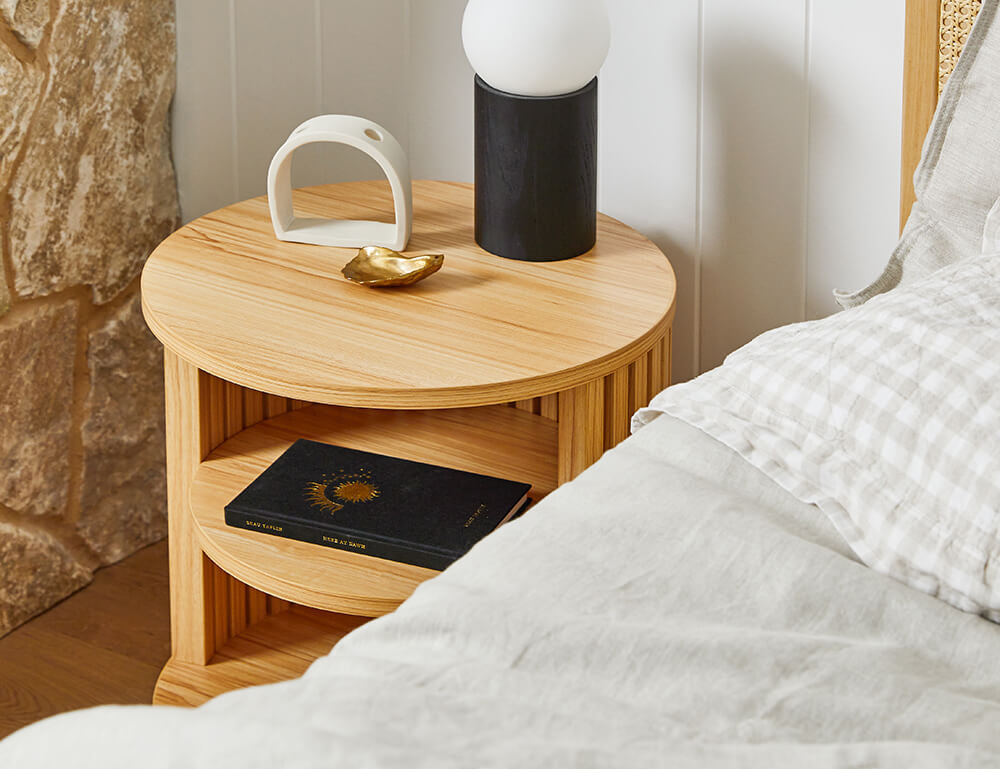
The chest of drawers does not need to match every bedroom item exactly, but it should feel connected to the room. Look at the bed frame, bedside tables, flooring, and wardrobe finish before choosing a tone.
If the room already has several timber tones, choose a finish that either repeats one of them or adds a clear contrast. If the room is mostly white or neutral, a timber chest can add warmth. If the room is already dark and cosy, a deeper finish may feel intentional rather than heavy.
The top of the chest also matters. It can become a styling surface, a practical drop zone, or a place for a mirror. Leave enough visual space so the unit does not become another clutter point.
Think About Long-Term Use
A chest of drawers often moves between rooms over time. It might start in a main bedroom, then shift to a guest room, nursery, hallway, or kids’ room later.
This is why simple proportions and flexible storage matter. A chest that is too specific to one room may be harder to reuse. A well-sized piece in a versatile finish can stay useful through multiple room updates.
If you are choosing between two sizes, consider whether the larger unit will still work if the room layout changes. The best storage furniture solves today’s problem without creating tomorrow’s.
Frequently Asked Questions
What size chest of drawers should I choose?
Choose based on wall width, room depth, drawer clearance, and what you need to store. A wider unit can offer more category separation, while a compact chest may work better in smaller bedrooms.
Is a five-drawer or six-drawer chest better?
A five-drawer chest can be better for vertical storage and smaller spaces. A six-drawer chest can be better for shared bedrooms, wider walls, and separating clothing categories.
Should my chest of drawers match my bedside tables?
It does not need to match exactly, but it should feel connected through tone, shape, material, or style. Aim for a bedroom that feels coordinated rather than identical.
Where should a chest of drawers go in a bedroom?
Place it where drawers can open easily and where it does not block walkways, doors, wardrobes, or curtains. Many bedrooms work well with a chest opposite the bed or on an empty side wall.